President Trump Prepares To Walk Away From The Third, and Last Nuclear Treaty
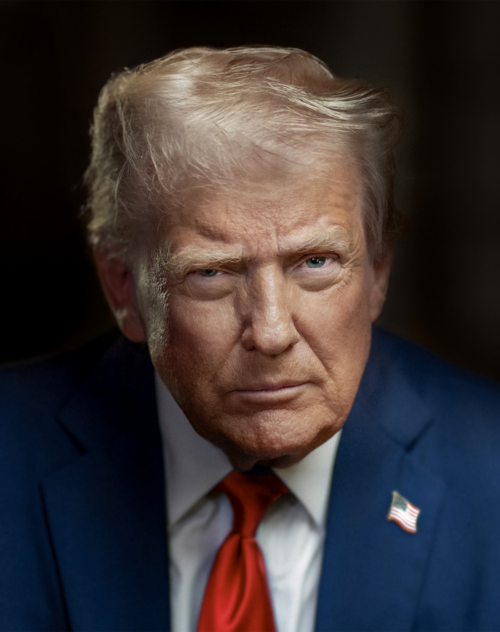
Talk about mixed signals. By now, everyone is, no doubt, aware that President Donald Trump believes that he is the "Peace President" and entitled to receive the Nobel Peace Prize. Just days ago, he was given Maria Corina Machado's 2025 Nobel Prize, indicating that she, too, believes that Trump should have received this recognition.
In support of his claim to be the Peace President, Trump will rattle off a litany of regional conflicts he has helped end. While these efforts are a worthy cause, after all, nearly everyone supports world peace, when it comes to the ultimate conflicts, global thermo-nuclear war, a very different image of the President emerges.
Here we see the most hawkish President in the nuclear era. A leader who is willing to let existing disarmament treaties expire with absolutely no American effort to preserve them. Exactly why this is the case is uncertain. It may be Trump's repeated assertion that international agreements aren't worth the paper they're written on. Or perhaps he believes that his personality is such that he can convince any adversary to choose the path of peace, and therefore, treaties aren't needed. Or there is a third alternative, more sinister, that President Trump is willing to risk nuclear annihilation.
But whatever the motivation, the result is that America is embarking on a much riskier path, as the Trump Administration walks away from long-established treaty agreements designed to prevent a worldwide conflagration.
It's fascinating to see how many of today's major geopolitical problems are directly linked to Trump's withdrawal from past nuclear treaties. As this is written, the USS Abraham Lincoln is steaming to a position just off the coast of Iran; speculation is that another American strike against that country is imminent. Last summer, you may recall, the US launched a daring raid against presumed nuclear facilities in Iran. Presumably, this strike would have the same objective: curtailing Iran's strategic military capability.
Although there is some bluster that current American efforts were aimed at protecting Iranian demonstrators, those demonstrations have now ceased, and further strikes will likely have a more direct military objective.
But whatever the ultimate objective becomes, there is one irrefutable fact: the United States is acting with only the support of Israel in its strikes on Iran. No other country is supporting any further US efforts; even many of our Gulf allies have announced their opposition to further conflict. This list includes long-time allies Saudi Arabia and the United Arab Emirates. And, of course, the world's other two superpowers, Russia and China, have expressed strong reservations.
But it didn't have to be this way. In 2015, the United States entered into a joint agreement to curtail Iran's nuclear program. Joining the US back then were the entire European Union and the two superpowers, Russia and China. The agreement they all signed was called the Joint Comprehensive Plan of Action, the JCPOA. This treaty, endorsed by the United Nations, specifically limited Iran's nuclear ambitions (if indeed they had any).
Regrettably, President Trump walked away from that agreement, and it expired on its anniversary in May 2018. The result: America now acts alone, rather than having a united global coalition to support its efforts. Former joint JCPOA signatories, especially Russia and China, now stand in direct opposition to Trump's moves against Iran. By acting as a lone wolf, the President brings the possibility of war, not peace, closer.
Just one year later, President Trump withdrew the United States from the Intermediate-Range Nuclear Forces Treaty (INF). This treaty was aimed at eliminating a particularly deadly type of missile, short-range ballistic missiles. It was a specific treaty meant to limit the introduction of short-range missiles for which there would be no defense; it was not an all-encompassing agreement, and included only the United States and Russia. Trump objected, claiming that we should no longer abide by the agreement because China wasn't a signatory, although China's participation was never envisioned for the treaty.
In August 2019, the United States, under Trump, formally withdrew.
And Russia immediately began developing exactly those devastating short-range ballistic missiles that had heretofore been prohibited. Russia now has an entire stable of these missiles that have been used, to devastating effect, in its war with Ukraine. At the top of the list of these missiles is the Oreshnik, exactly the kind of missile envisioned by the INF Treaty, for which there is no defense. As a matter of fact, several Oreshniks have been able to take out America's top-of-the-line anti-missile systems, the Patriot Missile Defense system.
Again, Trump's withdrawal from an existing anti-nuclear treaty made war, not peace, the likely outcome.
If this is beginning to feel like a pattern, it's all set to repeat in a little more than a week. On February 5, 2026, the START (Strategic Arms Reduction Treaty) is set to expire. This 36-year-old treaty has been the one agreement limiting the number of nuclear bombs and missiles that the United States and Russia may possess. For over three decades, each side to the treaty has voluntarily limited its nuclear arsenal to fewer than 6,000 weapons, of which the limit on ICBM, Intercontinental Ballistic Missiles, had a limit of fewer than 1,600.
Twice, Russia's President Putin has offered to extend the START Treaty for one more year. Still, he has received silence from the Trump Administration. When President Ronald Reagan proposed the START Treaty in the late 1980s, it was seen as the best hope for negotiations to avoid all-out war—a way for Russia and the United States to come to peace in an often contentious world. Reagan's fundamental objective was to walk back from the threat of an all-out conflict.
None of these treaties was perfect, and actions on both sides indicate that eternal vigilance is needed to make sure they are adhered to. However,
these agreements provided a way for the great powers to talk. These Treaties provided a path toward peace before nuclear war.
As this is written, it appears a near certainty that President Trump will walk away from this third, and last, nuclear agreement between the world's two nuclear superpowers.
Will he still claim to be the "Peace President?"
Follow me here on ValueSide for more articles like this one.