Surviving the Coming Inflation - Lessons From the 1970s
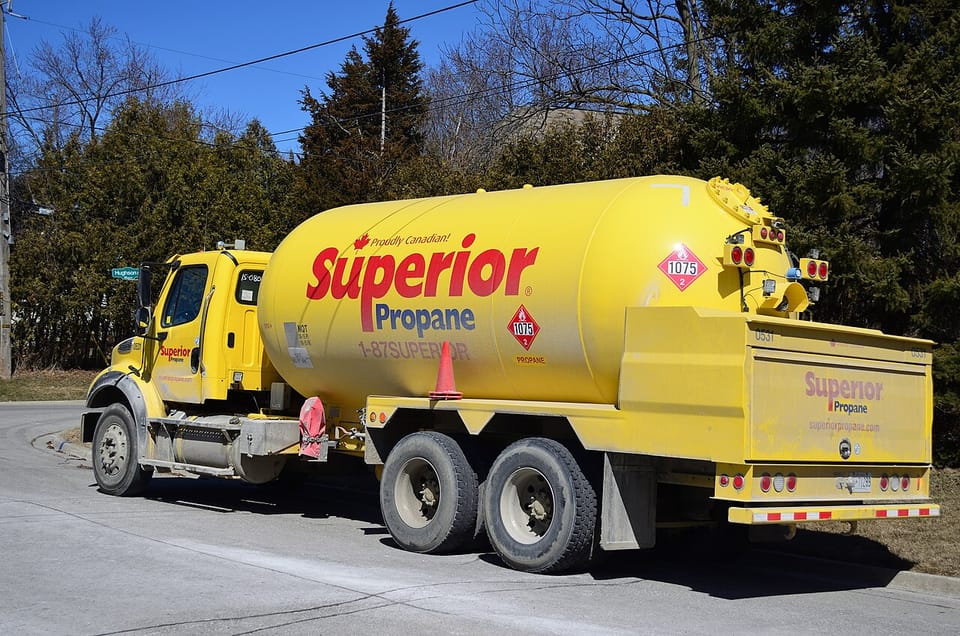
My propane man was just here – filling my 500-gallon tank for next year's winter. Over the years, we have come to know each other pretty well, and he was puzzled why I ordered my propane so early; usually, I wait until late fall to place my order. Why now?
The reason is simple: I lived through the 1970s, the last time we had a major oil shock like the one we're about to experience again. Back then, a group of countries decided to make life difficult by severely restricting the amount of oil they'd sell to the United States. The group was called OPEC, the Organization of Oil Exporting Countries, and they still exist. At the time, they were declaring their independence from the American oil companies, which control the sale of their oil – essentially, OPEC was nationalizing their oil.
But here's the part that nearly everyone missed, and the thing I was trying to get ahead of in purchasing my propane now. There is a natural tendency in our country to believe that things will continue as they are currently. Economists call this "normalcy" bias. It's a bias that leads us to believe that current conditions, such as a hike in oil prices, will return to normal in due time.
So, when we see a jump at the gas pump, we assume that things will soon correct, and we'll be paying a "normal" price shortly. Politicians take advantage of this bias, and reinforce it – telling us that better times are ahead.
We see this daily in the current War with Iran. The President and his cabinet are constantly telling us that the oil spigot will be turned back on as soon as we settle this conflict. Last week, the Energy Secretary, Chris Wright, announced on social media that American warships were escorting oil tankers through the Straits of Hormuz, which was good news, and the price of oil promptly fell by 20%. Unfortunately, that announcement was totally bogus, and oil rose back to its old level (nearly $100/barrel) just as quickly.
We'll ignore the implications of price manipulation and observe how willing those sophisticated oil traders were to accept the good news of a return to "normal."
Regrettable, the reality is that there may not be a return to normal, at least not anytime soon – that's the conclusion reached in a study by the US Energy Information Administration. In a report published March 30, 2011, entitled: Effects of crude oil supply disruptions: how long can they last?
The report looked at four instances of supply disruption. In the first, the 1978-79 Iranian Revolution, Iran's ability to supply oil to the world markets never returned to pre-revolution levels. In the second, Iraq's invasion of Kuwait, Kuwait's oil production, with US aid, returned to pre-invasion levels within 4 years.
However, Iraq, which also suffered extensive oil field disruption but lacked sufficient US Aid, has never recovered to pre-invasion levels. Finally, the report looked at the 2002 General Strike in Venezuela. That strike also caused extensive oil-field disruption, but, again, lacking US Aid, Venezuela's oil production has still not regained its prior output levels.
So, it's apparent that in each of these disruptions to the world's oil supply, outside help is usually required to achieve pre-crisis production levels. In the past, that help has always come from the United States. But even in the one positive case, Kuwait, it was four long years before that country resumed "normal" production levels.
Further, in each of these cases, oil field damage was confined to one or two countries. However, today, oil field damage extends throughout the Gulf States, making the recovery task much more extensive.
Higher oil prices will continue to drive inflation over the next several months, if not longer.
For those who are budgeting for the future, whether for a family or a major corporation, the need to provide for a steady increase in basic prices, in other words, inflation, will continue. In the 70s, a new acronym was coined to account for this rise in prices: COLA, the Cost of Living Adjustment. Although COLA has been out of favor for some time, it will make a real comeback as people and organizations increasingly need to deal with higher oil prices.
So, the recommendation for all of us: buy your propane, gas, or oil now!