The Week The Economic World Changed - And US Tariffs Repudiated
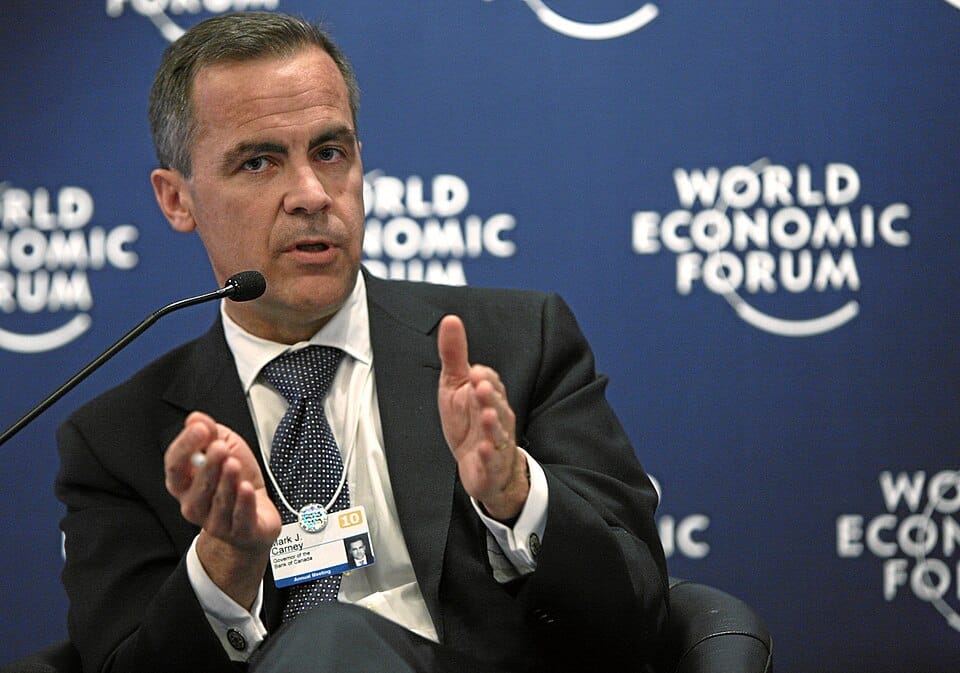
Circle this past week in red, mark it down as the moment that the world reacted against the economic policies of US President Donald Trump. It will be noted that the banner in this ongoing economic struggle between the United States and global trade was raised by Canadian Prime Minister Mark Carney.
Carney flatly stated what many had felt: that the global world order was over.
https://www.weforum.org/stories/2026/01/davos-2026-special-address-by-mark-carney-prime-minister-of-canada/
And that, ironically, was the one country that had initiated that order and brought it to a close. Although Carney did not mention that country by name, there could be no doubt that he was referring to America, specifically the policies of the Trump Administration.
Further, this was no idle comment from some backwater country that had little trade with the US; it was the pointed comments of the leader of the country that exports more goods and services to its southern neighbor than any other.
(Note: Mexico, with a significantly larger population than Canada, imports more US goods, but Canada EXPORTS more goods to the US.
https://www.census.gov/foreign-trade/statistics/highlights/topyr.html)
Before Trump’s Presidency began last year, trade between Canada and America was reasonable, open, and free, with Canada supplying vast quantities of oil and natural gas, as well as automobiles and car parts. Canada was a well-integrated and essential component of US Industrial production (both energy and finished goods).
As 2025 began, President Trump embarked on a two-pronged strategy to transform the existing Canadian relationship: on the one hand, proposing that Canada become the “51st State,” and later, when that strategy faltered, seeking to impose ever more draconian tariffs.
Just last week, after PM Carney signed a limited trade deal with the People’s Republic of China, Trump announced that he would likely impose a 100% tariff on all Canadian goods entering this country — a tariff so high that it would, no doubt, choke off trade.
Trump’s Tariff strategy has been America’s boldest transformation in its trade policy in generations. For the first time since the 1920s, the United States embarked on a progressive import tax.
Up to now, US Tariff policy had been centered on countering other nations’ tariffs, a way to “even the playing field.” On April 2, 2025, “Liberation Day,” Trump changed all that and instituted Tariffs that far exceeded those of our trading partners. Further, what began as a simple economic policy quickly morphed into a general foreign policy initiative.
Among the President’s more outrageous threatened tarffis were the threat of a 39% tariff against Switezerland bacause a phone call with Swiss President Karen Keller-Sutter, “rubbed me the wrong way,” or the 10% tariff on any European country that imposed his takeover of Greenland, or the 50% tariff on Brazil for taking legal action against former Brazilian President Lula del Silva, a personal friend of Trump.
The speed and scope with which President Trump instituted these Tariffs caught the world off guard. When he was finished, nearly the entire world was under some Trump Tariffs. Trade with the United States would henceforth be more complicated (with ever-shifting tariffs imposed at the US port of entry) and certainly more expensive.
Remarkably, for the first time in US History, this incredible change in tariffs was initiated by one man, the President. It all rests on the thin thread that America was under an Economic Emergency. That America’s trade situation had created such a dire situation (an “emergency”) that the President had to act. Acting under the provisions of the Emergency Economic Powers Act (IEEPA), Trump took control of US tariff policy.
It’s interesting to note how circumspect Trump’s initial tariffs were. His Executive Order #14257 imposed an across-the-board 10% baseline tariff on most countries, with reciprocal tariffs of 11% to 50% to offset the foreign tariffs applied to US goods. However, even though these tariffs were the highest since the 1930s, Trump went far beyond them when he threatened a cumulative 200% tariff against China and, as we’ve seen, a 100% tariff against Canada.
All this is about to change.
President Trump caught the world off guard with his “Liberation Tariffs” nine months ago; legal experts did not believe he would go there, trading partners never dreamed of what he had in mind, and even American politicians were unprepared for what followed. But all that is about to change, and PM Carney is leading the way.
The first definitive blow against tariffs will probably come from the US Supreme Court. On May 28, 2025, the US Court of International Trade ruled that Trump’s use of the International Emergency Economic Powers Act was not lawful. The President overstepped his authority. If the Supremes agree, which most observers think likely, the entire edifice of Trump’s Tariffs will fall. Although this will, no doubt, create an administrative nightmare, it will also bring to a close one of the most controversial chapters in American economic history.
On the other hand, the most profound reaction to tariffs is likely to come from the American public. Two recent studies indicate that those promises of prosperity were misguided. First, the Kiel Institute found that fully 96% of the cost of tariffs fell on Americans themselves. These new, higher prices, the result of pass-through tariffs, are paid by US consumers.
https://www.kielinstitut.de/publications/news/americas-own-goal-americans-pay-almost-entirely-for-trumps-tariffs/
Putting a fine point on this, the Tax Foundation estimates that Trump’s tariffs have cost American households $1,000 in 2025, rising to $1,300 this year. For months, Americans have complained about the “affordability” issue; it looks like we’re finding out where, at least some of those higher prices are coming from.
https://taxfoundation.org/research/all/federal/trump-tariffs-trade-war/
Under President Trump, the existing world order of integrated global trade and finance no longer provides the universal prosperity it promised. It doesn’t help the American people, nor does it benefit our trading partners. Prime Minister Carney calls the existing system “global integration,” when he told the audience at the World Economic Forum last week:
“ But more recently, great powers have begun using economic integration as weapons, tariffs as leverage, financial infrastructure as coercion, supply chains as vulnerabilities to be exploited.
You cannot live within the lie of mutual benefit through integration when integration becomes the source of your subordination.”
The world is discovering the illusion of “prosperity through tariffs.”
Follow me here on ValueSide for more articles like this.