Why Opening The Straits Of Hormuz May Not Lower Inflation
Consistently, the American people have responded, in nearly every opinion poll, that their most significant concern is affordability; that steadily increasing cost of necessities. It’s followed by their concern for future economic growth and the prosperity it brings.
Last week, President Donald Trump met Chinese Leader Xi Jinping. As you know, China is our most important trading partner, and the single country most responsible for those twin goals of low inflation and affordability. It would seem natural, then, that these two leaders would spend a substantial amount of their time together seeking ways to enhance their mutual trade and cooperation.
Unfortunately, the two leaders met for only 2 hours, hardly enough time to work out the kind of agreements needed to put the Sino-American relationship back on track. Indeed, it appeared that Premier Xi’s main concern was to make clear that the United States must not interfere in Taiwan’s internal affairs. At the same time, President Trump was most concerned about securing China’s help in opening the Strait of Hormuz and ending the conflict with China’s ally, Iran.
Indeed, while the White House did not indicate any substantive move by China to curtail hostilities in the Middle East, President Trump suggested that “deals” were made, providing that Boeing would sell its commercial jets and jet engines and that American farmers would sell agricultural products to China. It would be consistent with how Trump assembled his “team.” A team that was short on diplomats but long on American Business Execs anxious to put together the aforementioned deal. (1)
In the meantime, the American public continues to be plagued by steadily increasing prices. The Bureau of Labor Statistics, which tracks these things, reported that its core inflation rate surged to 3.8%, catching Wall Street analysts by surprise, who had projected an increase of 1/10th of a percentage point, to 3.7%. The demon in this equation was the steadily increasing cost of energy, which rose by 2 points from last month, bringing the total increase to nearly 18%. Hence, Trump’s reported entreaty for Xi to speak with the Iranians. (2)
However, an issue remains unanswered: the lifting of China’s embargo on rare earth minerals. It is a vital issue for US strategic interests. As our readers know, this country is running perilously low on high-tech munitions needed both to support Ukraine and combat Iran, as well as provide for our own strategic stockpiles. Many of those munitions, such as the Patriot anti-missile and anti-aircraft systems, and the F-35 Fighter Jet, require rare earths in their production. It’s a long story, but over the years, China has gained a near-monopoly over the production of these rare earths. (Interestingly, it gained the refinement technology from the US). (3)
Any US President faced with the looming possibility that we might lose critical defensive capabilities would, at a minimum, have discussed renewing China’s supply of these vital rare-earth minerals. It’s an open question whether Trump and Xi discussed this issue at their Summit.
The mere fact that neither Beijing nor Washington is touting a new trade agreement or a new rare-earth agreement suggests that no agreement was reached. Instead, the President likely came away with a couple of commercial deals that will do little either to mitigate Americans’ concerns over inflation or to provide for our Nation’s strategic defense.
Prices
So, on Tuesday came the report that the most widely watched measure of inflation, the Consumer Price Index, rose by 3.8% in April, accelerating by half a percentage point over March, the largest increase in inflation in 3 ½ years. What makes this particularly significant is that it is the measure of inflation on which most COLA “cost of living adjustments” are based. (4)
It’s when these circumstances begin that economists fear a vicious cycle of higher prices, leading to COLA adjustments, which in turn lead to higher prices, and so on. Economists weren’t the only ones looking at their spreadsheets and seeing red. In downtown Manhattan, the world’s largest financial market began to shutter. The US Treasuries started to price in rising inflation, and the numbers don’t look good. The most widely followed Treasury, the US 10-year Note, saw its yield rise to 4.59%, the highest level in years. Now, the 10-year10-year Note is the security upon which most Adjustable Rate Mortgages ARM) are priced. A rising price in the 10-year Note will mean higher home mortgage monthly payments for many, yet another part of the vicious cycle, rising prices, rising costs. Americans’ concerns about affordability continue to worsen.
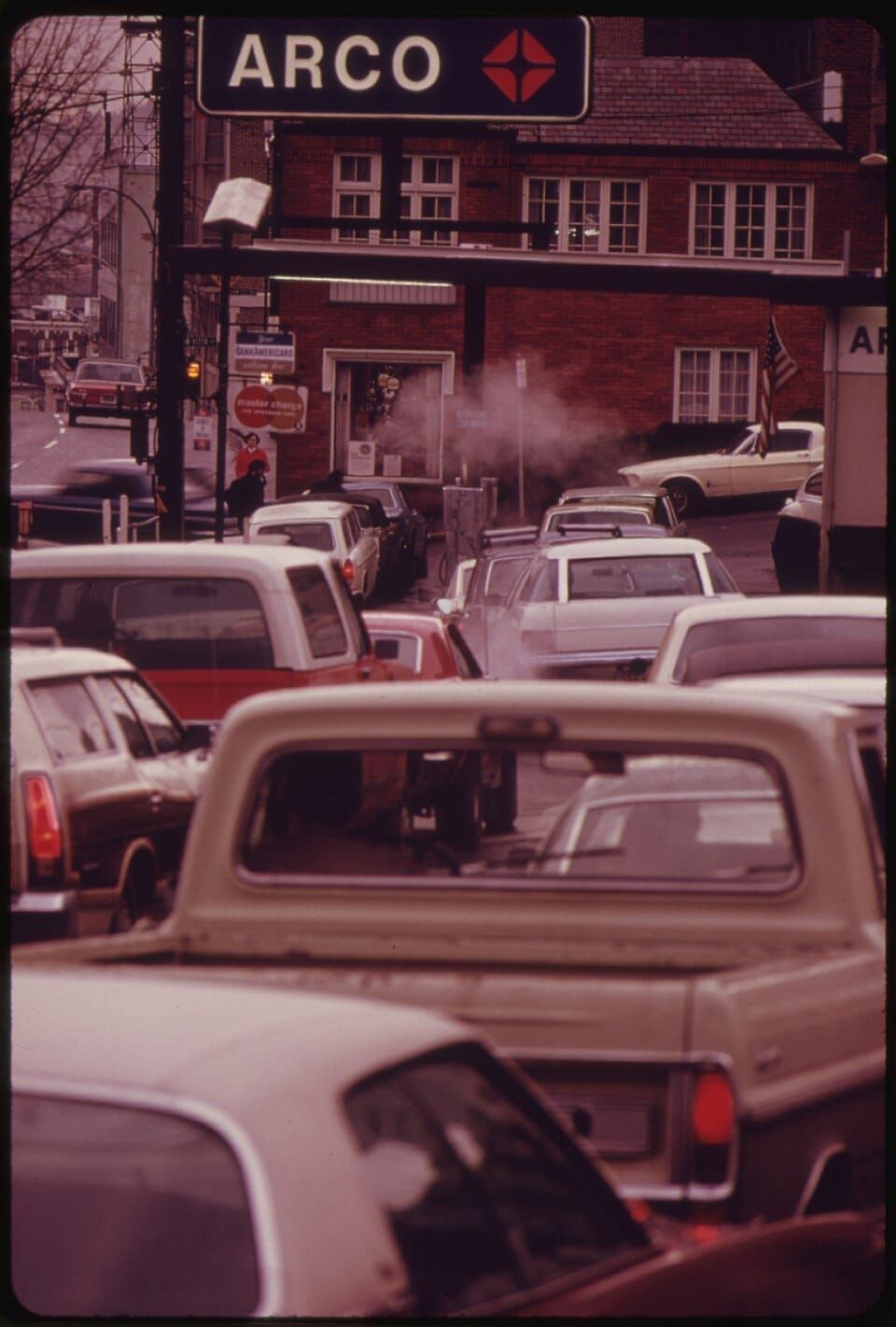
What we’re seeing is the same phenomenon that we experienced in the 1970s. The cause for both is rising energy prices; in both cases, a severe limit on the amount of oil coming from the Middle East — in the 70s, the OPEC Oil Embargo; today, the Iran Conflict. However, it’s what happens next that is critically important: rising prices rarely remain in the energy sector, as we’ve seen energy inflation quickly infect the financial sector. And it is this derivative inflation that was so incredibly difficult to control 50 years ago. When the contagion of higher prices rolled through the economy, it was nearly impossible to stop.
Then, President Nixon tried everything from wage and price controls and tax cuts to a stringent monetary policy, but nothing worked. Eventually, it came to the Federal Reserve, under Chairman Paul Volcker, to raise short-term interest rates to historic levels; the Fed Funds Rate rose to over 19% (it’s less than 4% today) in the summer of 1981. The result was predictable: a destruction of economic activity, but also a destruction of inflation.
Are we looking at the same sort of draconian rate policy today? No, we’re nowhere near the lengthy inflation problem we faced back then. But we’ve headed down that road. We’ve unleashed the same sort of price problems as we had in the 70s. Making matters worse, we’re seeing the energy price contagion now infect the financial system -note the bond markets this week. Inflation momentum is building, and opening the Strait of Hormuz alone will not curb this bout of inflation. If the 70s taught us one thing, it is that the second-level and third-level derivatives persist long after the initial cause is gone. The OPEC Oil Embargo lasted for only six months, from October 1973 til March, 1974. Yet here was Volker and the Fed fighting (and ultimately winning the inflation battle) in June 1981, seven full years after OPEC restored oil supplies.
Unfortunately, this “war of choice” with Iran has unleashed financial forces that likely will take months, or even longer, to rectify.
Producer Prices
This week, the Bureau of Labor Statistics reported the same sort of secondary impact, from the rise in energy prices, in the Production Sector of the Economy, as we just saw in the financial sector. Producer prices, those wholesale costs incurred by the companies that make things, rose by 1.4% for April — the largest rise in over 4 years. As consumers, we can look at this as a glimpse of the future. That is, the companies that will be making the goods we will purchase in a few months are experiencing higher costs. Those higher costs will be passed along to us as the products are completed and reach our store shelves — another indication of just how difficult the inflation contagion can be once it begins. (5)
SOURCES
- https://www.bls.gov/news.release/pdf/ppi.pdf
3. US Needs Another Decade to Fix $1.2 Trillion Rare Earth Crisis
4. CPI Consumer Price Index Summary
5. PPI Producer Price Index News Release summary
**
Follow me here on ValueSide for more articles like this one.