Why The Price Of Gas Is Our Best Measure Of International Trade
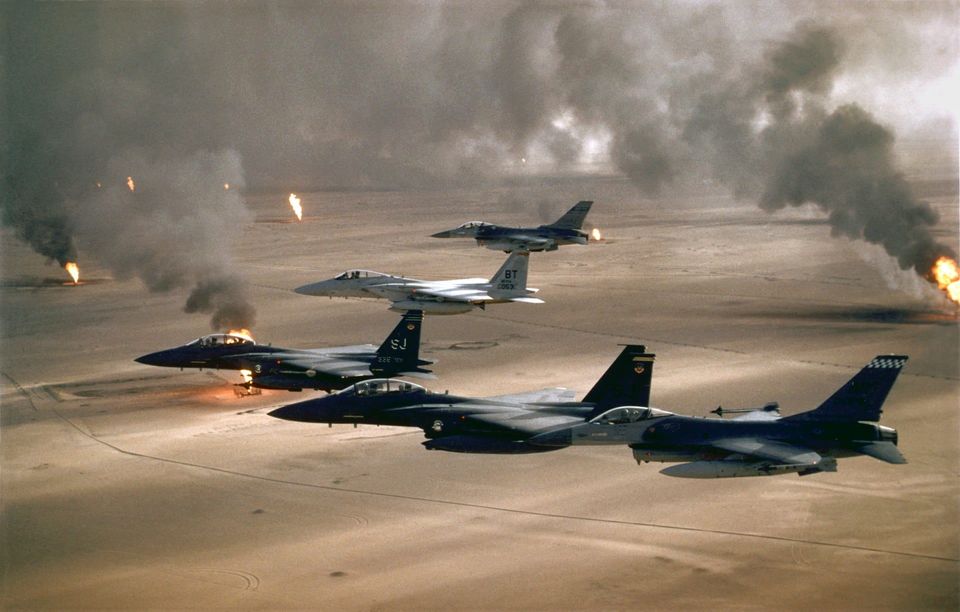
On Wednesday, the White House announced that the War in Iran would take a two-week ceasefire. It was welcome news throughout the nation, especially for the financial markets, which began the day with a tremendous rally.
After all, it’s the “money people” who understand the full financial ramifications of higher gasoline prices. The war premium currently stands at slightly over a dollar per gallon nationwide, an added expense many find difficult to pay. Simply put, higher gasoline and closely related diesel costs translate into higher prices across the board for all items transported to our local shops and stores.
For weeks, the President has assured us that as soon as the Strait of Hormuz reopens, the price of gasoline will return to where it was, and that is the expectation many have. Unfortunately, that’s not how financial markets work, and, most importantly, it underestimates the global nature of oil and gas trading.
That’s right: oil, and all of its refined products, like gasoline, trade daily around the globe. And while the price of each commodity differs from country to country, due to local availability and refining capacity, no matter where one trades an oil contract, they all move together. Take today as an example: no matter where on earth you are, the price of oil and gas is falling because of the Ceasefire Announcement.
It is this unified price action that should be your first clue that Oil Markets do not act as many believe. You may recall that at the beginning of the Iran Conflict, many in Washington, including the President, claimed that Americans need not worry about losing access to oil supplies. After all, the United States was one of, if not the largest, oil producers, and therefore, we did not need to import any oil. The Middle East could burn, or so they said, and we’d be just fine.
It’s a construct, a description of circumstances that do not exist in our present world, but could happen in a fanciful construct of our imagination. It’s like saying I could drive from my home in Philadelphia to Washington in an hour. While it’s possible, I could make that time, but I would have to break every speed limit and likely blow up my old car in the process.
There’s a big difference between what’s theoretically possible and what’s good business practice. Indeed, it is possible that the US could internally produce all of our own petroleum; certainly, this has been the promise from Washington for a generation or two. But to do so stretches current business practices.
Take a look at Exxon Mobile, our nation’s largest oil company and one of the two or three largest oil companies on earth. It may surprise you to know that ExxonMobil sells more than half of its gasoline and other petroleum products to overseas buyers. That’s right, our largest oil company sells half its output overseas. And this is no sudden business strategy: Exxon has sold oil overseas since 1877. That year, Standard Oil (Exxon’s old name) sold 60% of its oil production outside the United States.
Through a complex series of agreements, treaties, and contracts, Exxon entered into ongoing sales and purchase orders with customers worldwide. It has given Exxon the diversification and steady demand needed to construct a global commercial giant. Sometimes offshore demand is stronger than domestic demand, and sometimes it is weaker, but over time, it evens out, and Exxon is better off because of its global diversification.
Were Exxon to break all its contracts and agreements with its foreign customers, it might be able to supply only the US. But, as with our speeding-to-Washington example, doing so would violate international treaties and contracts — possible, but hardly worth the cost.
Because while we might achieve energy self-sufficiency, we would lose the rest of our trade. Items that we rely on, electronics, medicines, and machinery, to name just a few, would suddenly evaporate as America would suddenly abrogate international trade. Are we willing to give up our iPhones to achieve oil independence?
Once you gain this understanding of how our world really works, how we live in a global, trading environment, we suddenly realize how naive some of the proposals coming from Washington are. The entire Iranian Conflict began with the premise that the US could go it alone; we didn’t need anyone or anything.
The United States is indeed blessed to be one of the most self-sufficient countries on the planet. We have extensive natural resources, which provide us with a bountiful life. But not completely so. We decided years ago that we wanted more; we sought a lifestyle that provided essentials and luxuries that most others could only dream of. And so, we began to obtain those items from other countries through trade. These were countries with a competitive advantage over our local producers, providing better quality at lower cost.
For at least half a century, our leaders in Washington have accepted the compromise of global trade, knowing that it provided the American citizens with a better, less costly lifestyle than we could otherwise achieve. But to get that lifestyle, we would have to live within the community of nations, obeying their rules and laws.
As the 20th century began, we were perfectly positioned to become the dominant country within the community of nations. As the victors in World War II and the dominant industrial economy, we, by and large, wrote the very rules and laws for international trade. Our US Dollar became the currency of record — the dominant medium of exchange.
However, more recently, a new philosophy has assumed the Presidency. A Philosophy that does not value cooperation and does not abide by existing international laws and regulations. For the first time in American history, this new philosophy chose war to dominate the Middle East. America became the aggressor. Diplomacy was transformed into Conflict, as our country began an unprovoked attack on Iran.
It will likely be many months before we see the full cost of this new American philosophy. As for gasoline prices, it’s now apparent we’ll be living with an ongoing supply shock for some time, which means that the price at the pump will likely remain high.
But what of the balance of our international trade? How will our trade partners, those countries we trade with, react?. Will they ignore this new, uncharacteristic US aggression, or retaliate? Will the Commonwealth of Nations accept us back into their fold, or shun us? Will boycotts and sanctions suddenly be aimed at us?
The best measure of the re-normalization of international trade will be the global price of oil, which we can easily track at our own gas pumps.
**
Follow me here on ValueSide for more articles like this.