"I Love Inflation," Says Donald Trump - Really?
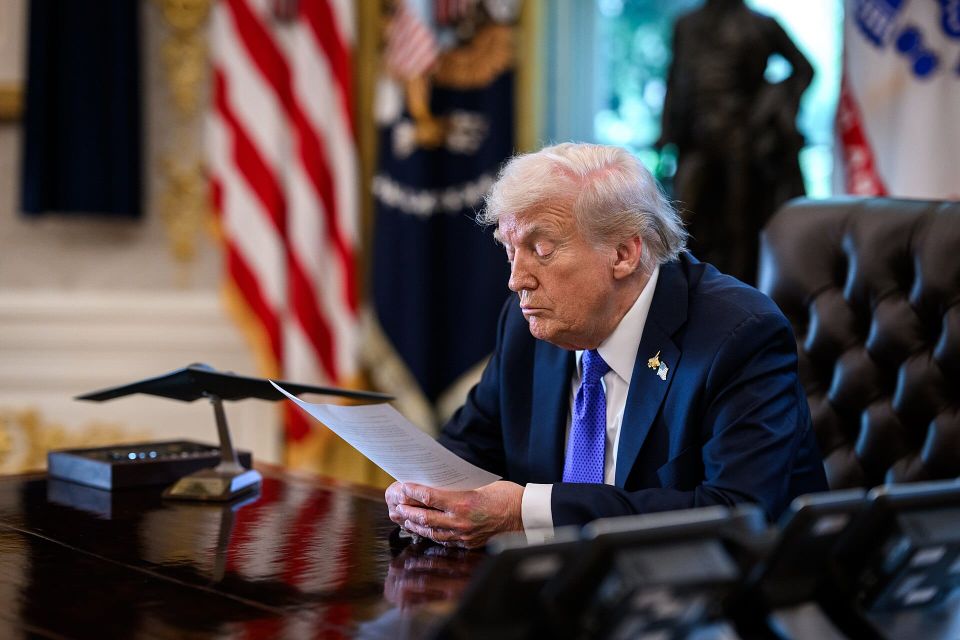
His statement was simple, direct, and offensive to nearly every American. When President Donald J. Trump on Wednesday proclaimed that he “loved inflation,” it was destined to become one of the all-time Presidential faux pas. No doubt this one comment will rank up there with Bill Clinton’s “It depends on what is, is.” In his defense of the Monica Lowenshi affair, or George HW Bush’s pledge: “Read my lips, no new taxes.” Just before proposing a substantial tax increase.
In Trump, we see the man who holds the nation’s economic destiny in his hands — the singular leader who must steward our future prosperity. Trump goes on to tell us that as soon as the War with Iran is over, everything will return to normal. Regrettably, nothing could be further from reality, and to proclaim that it will disclose a woeful lack of understanding of how our system operates.
Like many people, Trump believes inflation is due solely to rising prices, a misconception amplified by the way we measure it. In newscasts, government publications, and our day-to-day shopping, we see the price of everyday items rise — and naturally assume that those goods and items suddenly cost more. What we miss is that there are two sides to those transactions, and we ASSUME the other side, the side that Donald Trump is ultimately responsible for, is steady, unchangeable.
The other side of nearly every transaction that we perform (with the possible exception of Cyber transactions) is the United States Dollar — our nation’s currency. For over two centuries, the Dollar has been the currency of exchange for the food, shelter, goods, and services we purchase. If those purchases cost more than the fault must lie with the other side of the transaction, not the dollar. This is what Trump asserts when he claims that when the Iran War ends, prices will go back to where they were before (status quo ante).
Not so fast, Mr. President.
What if the inflation we’re experiencing is also due to the loss of US Dollar buying power, not just rising costs?
I remember the first time I ran into this seemingly radical concept. It was at a 1970s financial conference. Just like today, runaway inflation was a problem, driven chiefly by the rising “cost” of oil. One of the leading oil company executives was invited to address an audience composed primarily of financial analysts and investment managers. He began his speech by saying that the issue was not the rising price of oil. Needless to say, absolutely no one believes him. We all thought that he was trying to dodge responsibility. Like today, everyone in the audience knew that the price of oil was the problem, and if the oil executive lowered his price, everything would return to normal.
He then brought out a couple of charts that astounded us. The first was a chart of oil, priced in gold. The chart was virtually flat, showing that an ounce of gold at the turn of the century purchased 20 barrels of oil, and that this remained the case during that 1970s conference. The next chart he produced was for oil, this time priced in Swiss Francs, and again the chart was flat, showing that oil had not moved versus the franc either.
So what’s really happening, the Oil Exec asked? The US Dollar, priced in oil, gold, or Swiss Francs, was declining. The Dollar was also declining in price relative to the ordinary goods and services that Americans purchase — it’s why the Consumer Price Index (it should be the US Dollar Purchasing Index) rises.
It was also the point that economist Milton Friedman made in his famous comment: “inflation is always and everywhere a monetary phenomenon.” Friedman would make this comment over and over again, until everyone, especially Washington, began to understand the importance of monetary discipline.
Ridding the economy of inflation was difficult and painful, and it lasted throughout the 1970s and the early 1980s. There was no magic switch, no turn of the dial that returned the country to positive economic growth. The Federal Reserve used very high interest rates (double-digit), the nation withdrew from foreign wars (Vietnam), and endured a severe recession that significantly lowered demand before inflation finally ended.
None of this is news to Donald Trump. Like me, he lived through those very difficult 70s, and in fact, he endured a couple of bankruptcies back then. So, how can anyone, especially the President, say they “love” inflation? It’s really inexplicable.
Page II, This Week’s Economy
On Thursday, President Donald Trump announced that a “great settlement” with Iran was at hand. Both sides in the dispute are working on a Memorandum of Understanding (MOU) to bring the conflict to a peaceful conclusion.
You have to give the President credit; it was his first use of a device that businesses often use in negotiations, the MOU. However, by most counts, this was the 38th time that Trump has declared that peace is near. While average Americans are growing weary of these up-and-down negotiations, Wall Street seems not to tire of Trump’s Pollyanna announcements. Markets reacted to the latest peace prospect with a substantial rally on Friday, enough to bring the major averages into the black, with fractional gains in the Dow, S&P, and NAS.
But while investors may feel a sense of relief this weekend, costs keep rising. There is a website, iran-cost-ticker.com, that keeps a running tally of how much the US Taxpayers are doling out. Earlier this month, the cost of the Iran War passed $100 billion; this week, it passed $110 billion.
A cost, incidentally, which is over and above anything in the Federal Budget. It’s an unplanned expense that will have to be met with a special, Supplemental Appropriation. Something that is becoming a normal financial ploy in Washington. Since Donald Trump was sworn in as the nation’s 47th President on January 20, 2025, our nation’s debt has grown by over $3 Trillion.
With this kind of government-generated deficit spending, it follows that inflation has nowhere to go but higher. And that’s just what we saw in this week’s most-watched measures of inflation: the Consumer Price Index and the Producer Price Index.
Consumer prices rose by 4.2%, the first time in three years that retail inflation has been that high. While Producer Prices for final demand, that is at the final buyer, rose by 6.5%, the largest increase since 2022. In both cases, consumer and producer, the chief driver of these higher costs was energy (chiefly gasoline and diesel). The Iran Conflict and the closing of the Strait of Hormuz directly impacted both.
CONCLUSION
If we put on our financial cap, we can now see two ways that the Iran Conflict is impacting the nation’s balance sheet.
First, there is the direct cost of fighting the war. (A cost incidentally that may not yet include the complete accounting of capital assets such as bases, planes, and other equipment that have been lost.) The best current estimate of the cost of the war is more than $110 billion.
Secondly, and perhaps more importantly, is the hike in inflation. It’s a difficult-to-measure, ubiquitous expense borne by everyone and likely to continue long after any resolution to this war. All we can see now is that inflation is accelerating. In the past, when inflation marched higher, as it is now, it has proven to be extremely difficult to reverse.
So, while the conflict with Iran continues, our financial outlook becomes increasingly murky.
**
SOURCES:
https://iran-cost-ticker.com/
https://www.bls.gov/charts/producer-price-index/final-demand-1-month-percent-change.htm#
https://usdebtclock.org/
https://www.bls.gov/news.release/cpi.nr0.htm
https://www.bls.gov/news.release/ppi.nr0.htm